
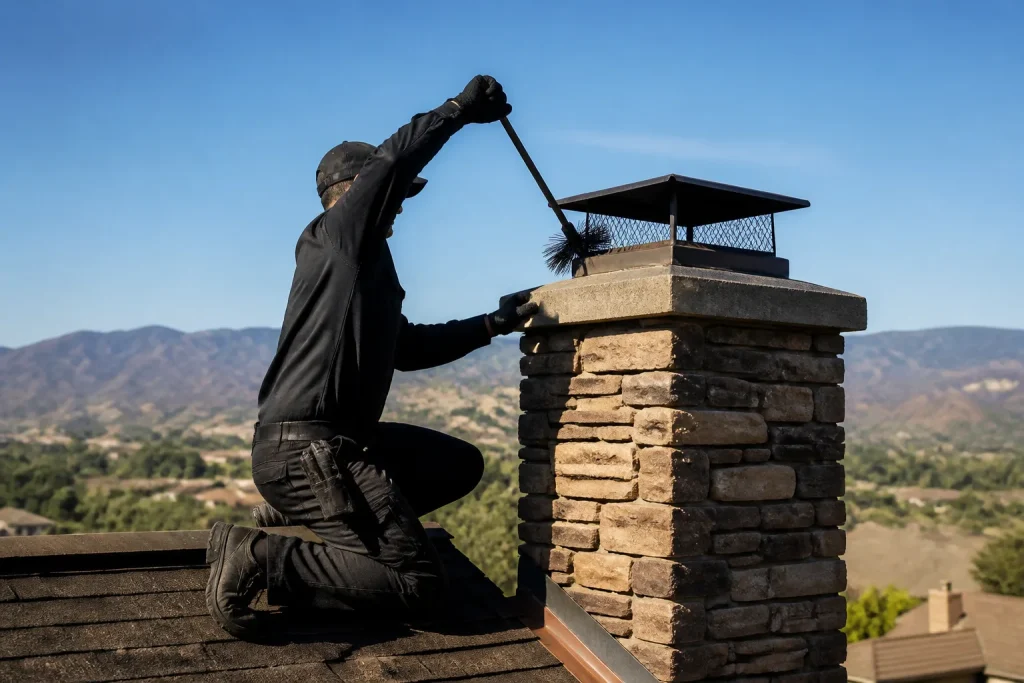
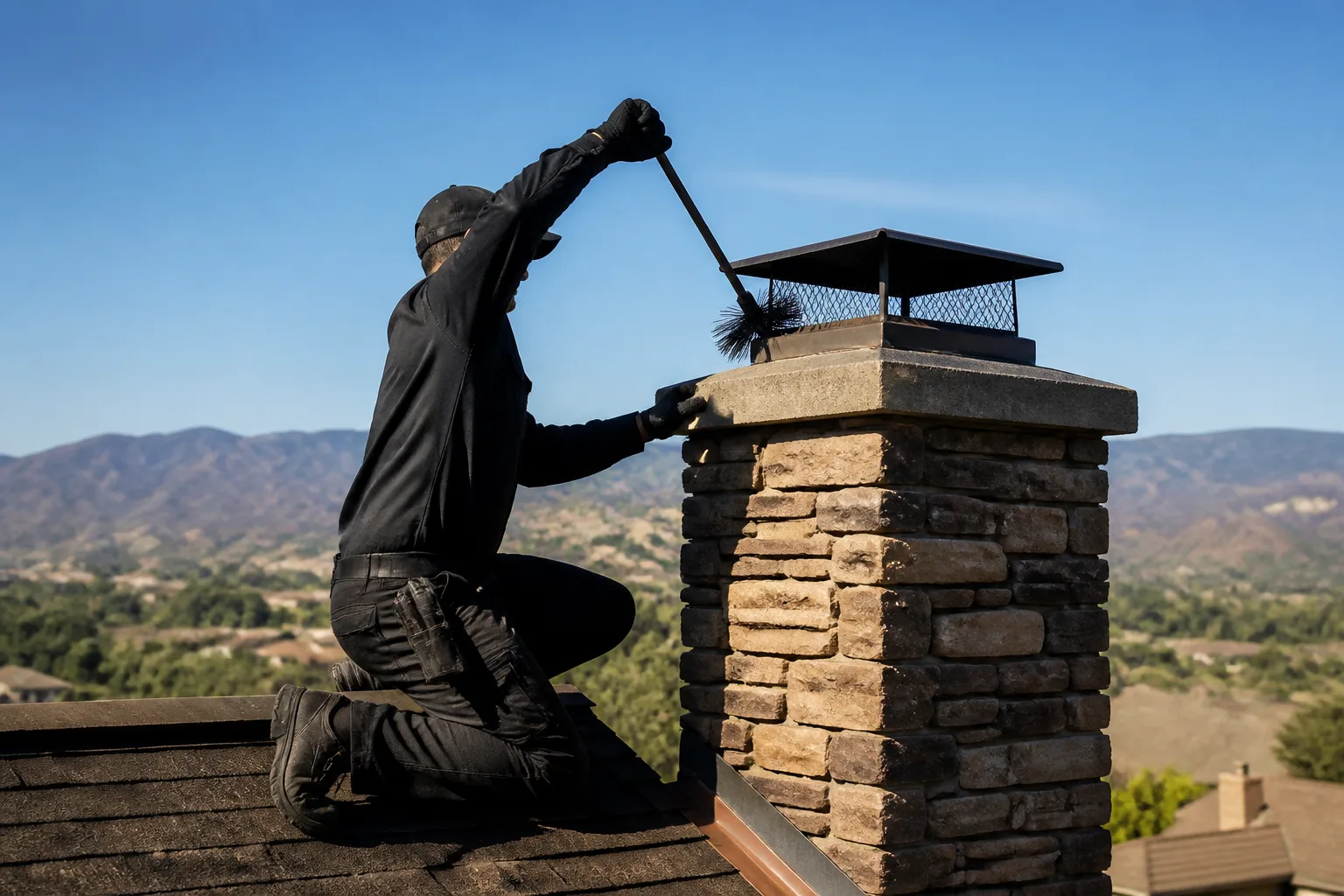
Emergency Chimney Sweep Near Me: What Valencia Homeowners Should Do First
If you suspect a chimney fire, your first call is to 911, not a chimney sweep. If you’re dealing with sudden heavy smoke or a carbon monoxide alarm, get everyone out, open windows if you can do so safely, and call for help once you’re outside. Most genuine chimney emergencies in Valencia are life-safety situations first and cleaning jobs second, which is something we’d rather every homeowner understand before they ever need to dial our number.
Calling a chimney sweep is not the first thing you should do when you suspect a chimney fire. Knowing the difference between a chimney fire and a smoky backpuff could be the decision that determines whether your house burns. If you’d rather not sort through this on your own, call (866) 472-5217 and we’ll talk you through what’s happening.
Is It a Chimney Fire or Just Smoke Coming Back Into the Room?
This is the single most important distinction you’ll make in the first minute, and the two situations require completely different responses. A chimney fire burns inside the flue itself, where creosote has built up to a combustible thickness. Homeowners in Valencia who’ve never experienced one often mistake the early signs for a normal hot fire until the sound starts.
Here’s how to tell them apart:
- A chimney fire makes noise. People describe it as a roaring sound, like a freight train or a jet engine inside the chimney. It’s unmistakable once you’ve heard it, and it sometimes comes with shaking or vibrating in the flue pipe.
- A backpuff or smoky fireplace is quieter. You’ll see smoke drifting into the room, often in pulses, but there’s no sustained roar. It’s annoying and frustrating, but it’s not an active chimney fire.
- Dense, thick smoke pouring from the chimney top often accompanies a chimney fire, sometimes with visible flames shooting from the cap. Normal wood smoke is wispier by comparison.
If you hear the roar or see flames at the chimney top, do not wait to see if it settles down. A chimney fire can reach temperatures that crack flue tiles, ignite surrounding framing, and spread into the attic space before you realize it’s moved beyond the chimney itself.
The First 15 Minutes: A Sequence That Prioritizes Life Safety
Our team has worked across Valencia long enough to know that panic leads to bad decisions. People grab a fire extinguisher and aim it at the firebox, which does nothing for a fire burning twenty feet up the flue. Others throw water on a wood fire, which can crack the firebox instantly. The right sequence is simpler and calmer than most people think.
- Close the damper if you can reach it without approaching the fire. In a wood-burning setup, cutting off the air supply can slow a chimney fire. Do not lean over an active firebox or reach into the opening to do this. If the damper handle is hot or the fire is burning hard, skip to step two.
- Close the fireplace doors or glass screen. This reduces the oxygen feeding the fire and keeps sparks from entering the room.
- Get everyone outside. Pets included. Do not stop to gather belongings. A chimney fire can compromise the structure faster than a room-and-contents fire because it travels vertically through concealed spaces.
- Call 911 from outside the house. Tell them you believe there’s an active chimney fire. Fire crews in Valencia respond quickly, and they have the training and equipment to deal with what they find.
- Do not call a chimney sweep yet. We say this without a hint of irony, because our own work comes after the fire is out. The flue must cool and be assessed for structural damage before anyone cleans or repairs it.
Once the fire department has cleared the scene and the chimney has cooled, that’s when a chimney sweep becomes relevant. We inspect for cracked flue tiles, damaged mortar joints, warped caps, and compromised liners before anyone burns another fire in that fireplace.
Carbon Monoxide Is a Different Kind of Emergency
A CO detector going off near the fireplace is not automatically a chimney emergency, but it’s also not something to shrug off. Carbon monoxide is odorless and colorless, and the distinction between a CO problem and a smoke problem matters because your response should differ.
Smoke tells you something is burning or drafting poorly. Carbon monoxide tells you combustion gases are entering living space without any visible sign. That’s why a detector is the only reliable warning most families get.
If your CO alarm sounds:
- Get outside immediately. Do not open windows and stay inside while investigating, because CO can render a person unconscious before they realize what’s happening.
- Call 911 from outside. Fire crews carry gas meters and can determine whether there’s an active leak or buildup inside the home.
- Do not re-enter until a professional has cleared the house.
Once the immediate threat is resolved, the conversation turns to the chimney and venting system. A blocked flue, a deteriorating liner, or a backdrafting gas appliance can all create CO problems. We use professional-grade products from brands like Gelco and Olympia Chimney when repairs are needed, because flue gases are not the place to cut corners with cheap components. In Valencia, where gas inserts and fireplaces are common, a CO alarm that goes off repeatedly is often pointing to a real venting issue that needs a proper fix.
What an Emergency Chimney Sweep Can and Cannot Do
Here’s the honest version, because you deserve to know before you call. An emergency chimney sweep is not the same thing as an emergency plumber or electrician. We cannot safely clean or repair a flue that just had an active fire burning inside it. The materials are too hot, the structure may be compromised, and anyone working on a chimney that hasn’t been assessed is taking an unnecessary risk.
What a sweep can do in the hours and days after a fire or a suspected problem:
- Inspect the flue once it’s cooled. A camera inspection shows cracked tiles, voids in mortar, warped metal, and creosote buildup that may have fueled the fire in the first place.
- Determine whether the chimney is safe to use. Not every chimney fire destroys the flue, but every chimney fire requires a professional assessment before the next burn. Skipping this step is how homes burn twice from the same fireplace.
- Recommend repairs that match the actual damage. In some cases, a full relining with a DuraFlex liner is the right call. In others, the flue can be restored by resurfacing with HeatShield rather than replacing it entirely. The right answer depends on what the camera shows, not on what’s easiest to sell.
- Clean the chimney thoroughly. Removing remaining creosote reduces the chance of a repeat fire once repairs are done.
What an emergency sweep cannot do is arrive at a house with an active fire, climb onto a hot roof, and start cleaning. If you’re standing outside watching flames come out of your chimney, the fire department is your first call, and there’s no version of this story where a sweep gets there faster or does more good in that moment.
What to Tell the Sweep When You Call
When the immediate danger has passed and you’re ready to have the chimney addressed, the quality of your first call determines whether the crew arrives prepared or has to make a second trip. We ask these questions for a reason, and having the answers ready saves everyone time.
- When did you last burn a fire? If it’s been months, the situation is different from a fire that was burning an hour ago. A chimney that’s been cold for weeks tells us it’s safe to inspect and clean on arrival.
- What fuel do you burn? Seasoned wood, gas logs, and an insert with a metal liner all have different failure modes and different inspection needs. Knowing the fuel type helps us bring the right tools.
- What did you observe? The roar of a chimney fire, smoke rolling into the room, a CO alarm, or just a nagging smell on windy days. Each observation points toward a different cause, and the more specific you can be, the better.
- Was there an active fire at any point? If the fire department responded, if you saw flames, if you heard the roar, we need to know. That changes the inspection protocol completely.
There’s a practical reason this matters. If you call and say “my chimney needs a cleaning” but what you actually had was a chimney fire two nights ago, we’ll arrive ready to sweep and instead need to perform a structural assessment. Different tools, different time, and you’d rather not pay for a second visit or wait another week while we schedule the right crew.
Why Chimney Sweep Valencia Approaches Emergencies Differently
Most chimney companies in the Valencia area are set up to clean flues and leave. That’s fine for routine maintenance, but it leaves a gap precisely when homeowners are most vulnerable: after a fire, after a CO scare, after a heavy smoke event. You don’t need a brush at that point. You need a diagnosis and, very often, a repair.
We built this company around the fact that chimney sweeping and chimney repair belong together. Every sweep we do includes an inspection, because the cleaning is the part you can see and the condition of the flue is the part that actually matters. When we find cracked tiles or a deteriorated liner, we don’t hand you a business card for someone else. We handle it, using materials from brands chimney specialists trust. That might mean a HeatShield resurfacing job that restores the flue without a full rebuild, or a DuraFlex liner installation when the damage is beyond what resurfacing can fix.
We also handle dryer vent cleaning as a separate safety service, because the same house with a neglected fireplace often has a lint-clogged dryer vent behind the wall. Both are fire risks. Both get ignored until something goes wrong. Both deserve attention before they become emergencies.
Preventing the Next Emergency
None of this is meant to scare you into calling us tomorrow. The truth is most chimney problems in Valencia build slowly. Creosote accumulates over dozens of fires. Liners crack gradually. Damper rust and cap damage show up long before they cause a failure. The homeowners who end up in emergency situations are usually the ones who never had a reason to look at the chimney in the first place.
The cheapest emergency is the one that never happens. Annual inspections catch creosote buildup before it becomes fuel for a chimney fire. They catch liner cracks before combustion gases find their way into walls and living spaces. They catch the small stuff while it’s still small and fixable.
If you’re in Valencia and you’ve never had the chimney inspected, or it’s been a few years, or you just bought a house and you’re taking the previous owner’s word that the fireplace is fine, now is the time to check. Not the night you want to light the first fire of the season. Not the morning after the CO alarm goes off.
The Bottom Line
An active chimney fire means 911 first, full stop. Heavy smoke or a CO alarm means get outside and call for help from a safe location. A chimney sweep comes after the immediate danger is resolved, and the right sweep will inspect, diagnose, and repair rather than just clean. If you’re in Chimney Sweep Valencia territory and you need an assessment after a fire, a CO scare, or a smoking incident, call us at (866) 472-5217. We answer 24/7. Fast dispatch from 7am to 7pm, Sunday through Friday. Estimates are free, and we’ll tell you honestly what needs to happen next.
Frequently Asked Questions
Close the damper only if you can reach it without approaching the fire, then get everyone outside and call 911 from a safe distance. A roaring sound, shaking flue pipe, and dense smoke are the classic signs of an active chimney fire, and the fire department is equipped to handle what a chimney sweep cannot.
No. A flue that has just had an active fire is too hot and possibly structurally compromised for anyone to work on safely. The fire department handles the fire, and a chimney sweep performs a structural assessment once the chimney has cooled.
You won’t be able to diagnose that yourself, which is why the response is to get outside and call 911 immediately. Fire crews carry meters that detect carbon monoxide. Once the house is cleared, a chimney professional can inspect the flue and venting system for blockages, liner damage, or backdrafting that may have caused the buildup.
Once a year is the standard recommendation for wood-burning fireplaces that see regular use during the cooler months. Even if you burn less often, an annual inspection catches damage and buildup before it becomes an emergency. If you’ve never had the chimney checked since moving in, that’s the place to start.
Written by the team at Chimney Sweep Valencia, serving Valencia since 2012.
Need Chimney Cleaning Help?
Call Chimney Sweep Valencia - licensed & insured, here with fast help in Valencia.
(866) 472-5217